David Sheff's brain hemorrhage
Beautiful Boy: A Father's Journey Through His Son's AddictionDavid Sheff's brain hemorrhage is a near-fatal medical crisis that changes the focus of his memoir without resolving the danger that has defined family life. In the neuro ICU, he cannot remember his name or the year; afterward, he recognizes that even this injury has not removed his worry about Nic Sheff. The crisis eventually shifts his attention from trying to manage Nic's recovery to undertaking his own, while leaving the family's future uncertain.
Background and Accumulated Strain
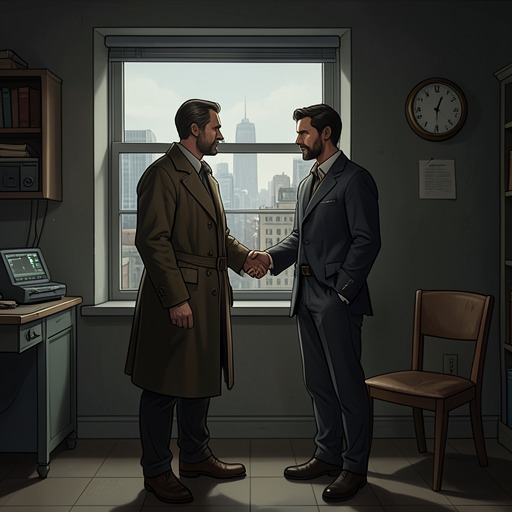
The hemorrhage arrives against years of relentless anxiety about Nic's addiction, not as a neatly isolated medical episode. In one earlier crisis, the family endures four days without knowing whether Nic is all right. When he returns home remote and exhausted after drug use, David searches for a treatment program that will take him immediately, fearing he may lose his son. Such episodes make worry a recurring condition of family life: relief comes when Nic seems better, but it is temporary and shadowed by the possibility of another crisis.
David later recalls that he had rationalized this constant distress as the inevitable burden of a conscientious parent. He tried to enjoy the periods when Nic was doing well and to remain present with Karen Barbour, Jasper Sheff, Daisy Sheff, and other family and friends. The effort to live alongside fear did not mean that fear had receded. Years of watching Nic's crises had become familiar enough that David could treat the strain as ordinary, even as his own health became precarious.
The Hemorrhage and the Neuro ICU
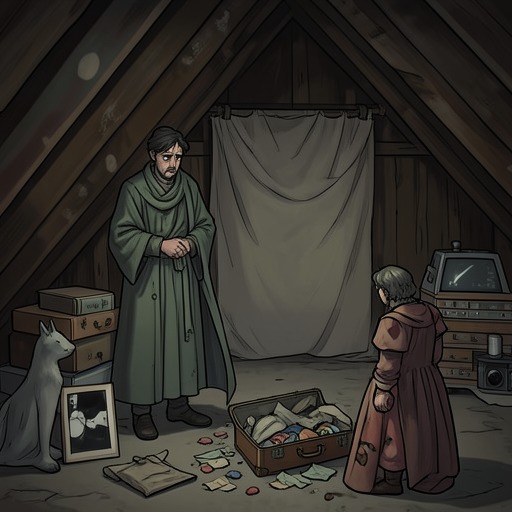
In the aftermath of the cerebral hemorrhage, David wakes to the recognition that he is in the neuro ICU. He is in a white room at UCSF Medical Center, surrounded by sonar monitors and nurses who kindly ask him to supply his name and the year. He cannot remember his name; when asked the year, he can only guess. The loss of basic autobiographical certainty makes the crisis immediate and concrete: this is not simply a metaphor for being overwhelmed, but a potentially lethal injury that has disrupted his memory.
Before the hemorrhage, David had imagined that a procedure like a lobotomy might scrape away the pain of worrying about Nic. The reality is radically different. He has undergone a kind of brain scraping, but it is a dangerous medical event, not an escape from anguish. Even in the hospital, the worry remains. The contrast between wishing to erase Nic from his mind and being unable to remember his own name shows how little control David has over either his body or the fear that binds him to his son.
What the Crisis Does Not Erase
As David recovers, he repeatedly turns over the fact that the hemorrhage did not remove his concern for Nic. He recalls the many times Nic was missing or on the streets, and the earlier fantasy that a spotless mind might end both his agony for Nic and his anguish over him. After the injury, he no longer wants Nic erased. He becomes grateful for the feelings he once wished to eliminate, including worry and pain, because they accompany the love he most wants to keep.
That change does not make the danger disappear. David acknowledges that Nic may relapse and that other catastrophes remain possible; he also understands that no parent can save a child from every danger. The family story refuses the tidy closure David had hoped to give it. He had wanted Nic's letter to Jasper to serve as a happy ending, a sign that the family had moved into a post-addiction phase. Nic's latest relapse instead confirms that addiction can go into remission and be managed through difficult work, but is not cured. The hemorrhage belongs to this larger refusal of easy resolution: survival brings insight, not certainty.
Delayed Lessons and a Change of Focus
The meaning of the hemorrhage does not arrive all at once. Immediately afterward, David feels that surviving a near-death experience has made life scarier, not simpler: tragedy can strike without warning, to him or to his children. Later, he decides he had judged the experience too early. He turns fifty in December and discusses the preceding years with a therapist. The neurologists had dismissed the idea that stress caused the hemorrhage; the therapist does not claim otherwise, but observes that the relentless strain could not have helped.
The therapist asks how David wants to spend the rest of his life and challenges him to consider whether Nic's mental health matters more than his own. David understands that he cannot change Nic, only himself. He attends Al-Anon meetings and begins twice-weekly therapy, including, for the first time, lying down on the therapist's couch. In that work he examines layers of guilt and shame and recognizes that concentrating on Nic's repeated crises had sometimes felt safer than concentrating on himself. The change is not a rejection of his son; it is a decision to stop making Nic's recovery the measure of David's own life.
Family, Time, and an Unfinished Recovery
The hemorrhage helps David emotionally grasp a distinction he had previously understood only intellectually: his children will live and eventually die with or without him. That realization is staggering to a parent, but it also allows him to let them grow up. He accepts that he cannot control or cure Nic's addiction, while continuing to love him and to hope for him. He imagines a relationship with Nic based less on enabling and control and more on independence, acceptance, compassion, and boundaries.
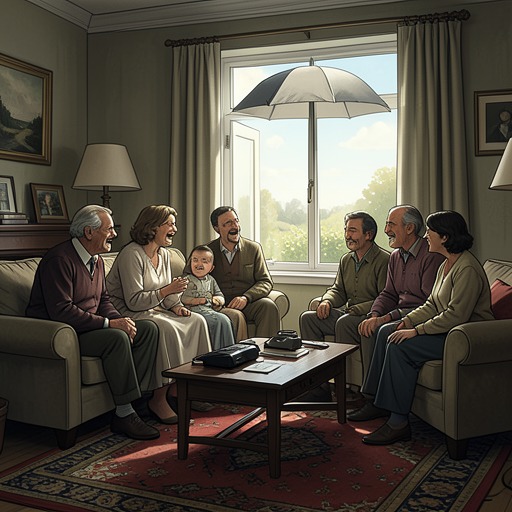
A year after the hemorrhage, the family marks the anniversary at a weekly dinner at Nancy and Don's, alongside the children's graduations and birthdays and David's anniversary. That ordinary gathering makes the passage of time tangible without suggesting that the crisis has been neatly overcome. David still fears another hemorrhage and Nic's relapse, but he has begun to make a different choice about how to live with uncertainty. The event's significance lies not in a cure or a final revelation, but in a gradual reorientation: mortality becomes a reason to attend to his own recovery, and love no longer requires the illusion that he can save his children.